The Economist this week | | Highlights from the latest issue | | |
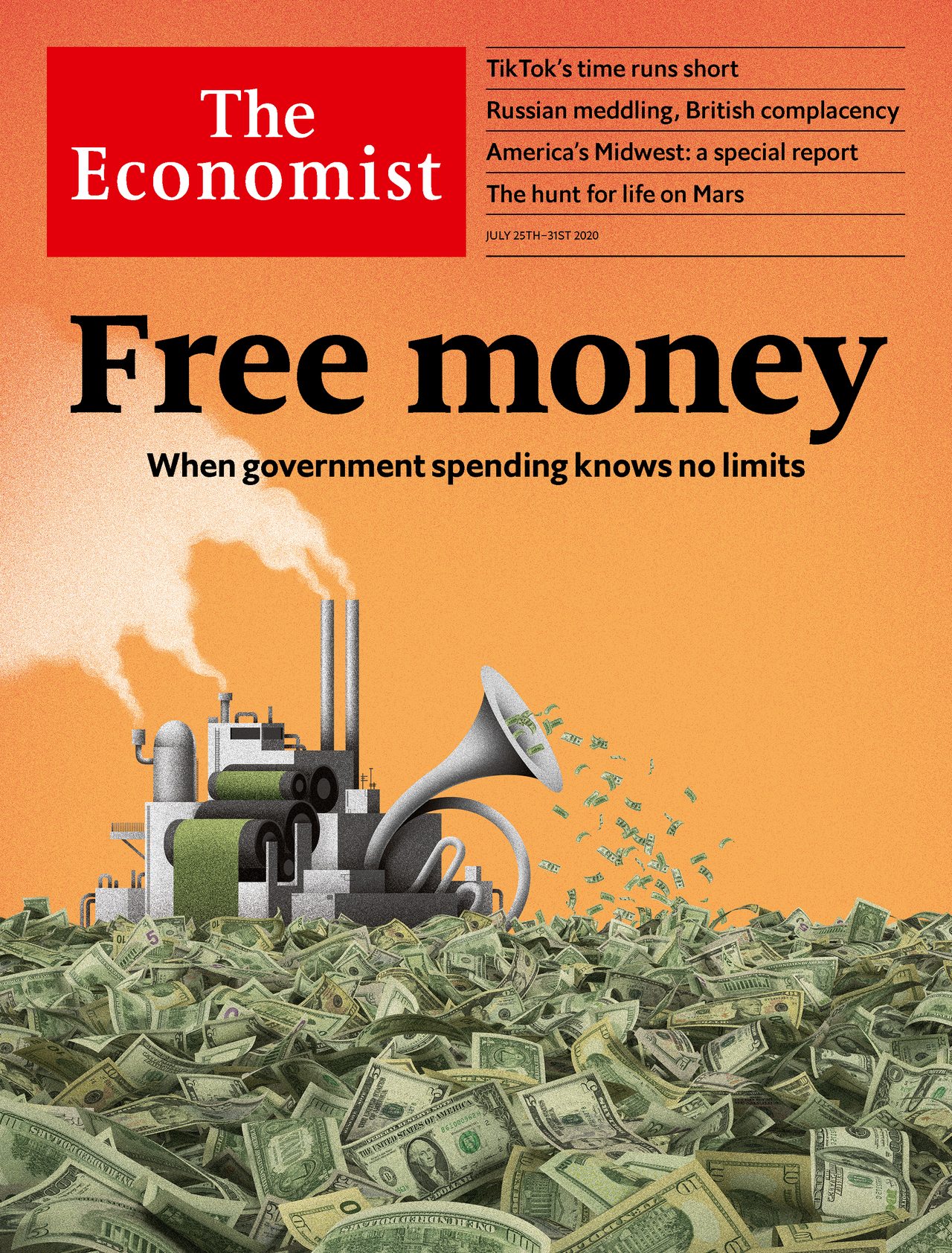
| Our cover this week is about the profound shift taking place in economics as a result of the covid-19 pandemic. Much as in the 1970s when clubby Keynesianism gave way to Milton Friedman’s austere monetarism, and in the 1990s when central banks were given their independence, so the coronavirus marks a new paradigm. It is characterised by government borrowing, money-printing and intervention in capital markets—all underpinned by low inflation. Each era of economics confronts a new challenge. After the 1930s the task was to prevent depressions. In the 1970s and early 1980s the holy grail was to end stagflation. Today policymakers must create a framework that allows the business cycle to be managed and financial crises to be fought without a politicised takeover of the economy. | | |
 | Zanny Minton Beddoes
Editor-In-Chief | | |
Editor's picks Must-reads from the current edition | | |
| A long-delayed report into Russian interference in British political life was published by Parliament’s intelligence and security committee. The report stated that the threat from Russia was more embedded, and has been a problem for longer, than previously thought. Russian interference is seen as the “new normal”. It said the government is playing catch-up, especially in cyber-espionage, in which Russia is a “highly capable” adversary. | | |
| United Airlines described the latest quarter as the most financially difficult in its 94-year history. Revenues plunged by 87% from April to June compared with the same three months last year, pushing United to a net loss of $1.6bn. The carrier burnt through an average of $40m in cash a day, though it expects that to ease this quarter. | | |
In case you missed it One of our most popular stories from the past seven days | | |